Sunday, April 24, 2016

When Sandburg, Longfellow and Rumi Look Through a Window


We all are inquisitive about discovering the yet undiscovered. Some of us do so as scientists, musicians, painters, photographers, philosophers or poets. The path to discovery is the purposeful peeping into what is partly covered by knowledge, dogma or experience. Thus the first step is to find an opening, or in some instances pierce one through our curiosity and eagerness to know more.

The symbolism of an opening can be materialized through an actual structure and transformed into metaphors. In poetry, most commonly an actual window or a door are used to uncover what is or was behind them. In every language I know there are poems about windows and doors, and perhaps by projection about balconies. I belong to the latter group of curious people who have written about balconies and what they may represent (1). In short, a balcony is an escape from the main building. A place of evasion from where one can watch the street and people below, a sunrise, a sunset, and keep memories of a kiss stolen at high noon or at dawn. If not stolen, borrowed for sure.

… I was reading poems by Carl Sandburg, an American poet I like, perhaps because of some European influence his life attitude adopted given the Swedish descent of his parents. I stopped on the page entitled “At a Window”. I have read it many times before but my eyes lingered on that page again. It starts by the poet asking God to give him hunger and other difficulties, perhaps to test him. But the request Sandburg has is to also give him the chance to be loved and experiencing love. The powerful ending lines are:

But leave me a little love, 
A voice to speak to me in the day end, 
A hand to touch me in the dark room
Breaking the long loneliness. 
In the dusk of day-shapes 
Blurring the sunset, 
One little wandering, western star 
Thrust out from the changing shores of shadow.
Let me go to the window, 
Watch there the day-shapes of dusk 
And wait and know the coming 
Of a little love.”

The window is an actual one, but the await for love is a symbolic gesture based on the experience of the poet. Suddenly, the banal window becomes that opening to a hope and demand for the most fundamental of our wants.

So, I searched for another poem I like, this time by H.W Longfellow. This one is about lost love, lost happiness, and uses a visit to his old house to remember the good moments and what is now lost.  It is entitled “The Open Window” and we see the poet visiting the home where he was a child once. Now he is there with his own child, and he remembers the sounds and liveliness in that house he knew. And looking to a window that hides no laughter or joy now, he writes:

“And the boy that walked beside me,
  He could not understand
Why closer in mine, ah! closer,
  I pressed his warm, soft hand!”

In this case the window is an opening for introspection and remembrance. The quiet building is like a lifeless body and the open window akin to a gaping wound.

… The symbolism of a window is different from that of a door in poetry. A door has active expectation – to walk through it, to have someone else walk back to you. A window in contrast, is a true opening from which in most instances we expect feelings, actual light or memories to come through. I say “most instances” because, as a health professional, I have encountered many occasions in Asia and Northern Europe where a window is left open for the room where a patient is taking his/her last breath. An open window is needed for the soul to leave the room.

I have a tendency to end my literary reading by going back to Rumi. His short statements seem most conducive for departing thoughts that stay with me long after I close the book.
A few lines of Rumi do bring the concepts of a window to love as follows:

“Moonlight floods the whole sky
From horizon to horizon
How much it can fill your room
Depends on your window.”

And:

“Love said to me:
There is nothing that is not me.
Be silent.”

… So I closed the book.

April 24, 2016
© Vahé A. Kazandjian, 2016

 I took this photo in a church in Buenos Aires, Argentina.

Saturday, April 23, 2016

"This is the way the world ends. Not with a bang but a whimper."


Broken stone
Upon broken stone
I made a place
For desert dreams
To find dark
Shade

The black old cat
Was burned
In a firy sunset
For there was no river to run
And no sea to set in
So the cat let it go

Stone upon
Broken stone
I made a space
For lost sunsets
Black old cats
And a name
I found hiding
In a desert dream

It may never rain
Again
In Tidikelt
Yet the desert hare
Will learn to chase its shadow
In search of shade
And the name I once knew
Will dream of rivers
Where river beds once slept

For
Broken stone
Upon broken stone
I made a place
For things
To end

April 23, 2016
© Vahé A. Kazandjian, 2016

The title of this posting is from a poem by T. S Elliott "The Hollow Men"

I took this photograph in Morocco of a man making clay pots and dishes.


Thursday, April 7, 2016

Moonlight Trail


In the meadow the lark will soon
Nest
Twig by twig, song by song
Yet its flutelike call for spring
Will catch no dream on unmoon nights

Let your steps free
But leave no footprints
In the desert at high noon
Touch old wounds
But leave no scars

Yet leave by trails
Unmarked and worn
From where I often watched
People, sunsets, oceans and silent deserts
Become one, as the trails turned around

To let my steps free
And erase all footprints
Upon the sand and ocean waves
Or high desert trails at noon
For I knew how to touch old wounds
And leave no scars

April 7, 2016

© Vahé A. Kazandjian, 2016

Tuesday, March 8, 2016

We May Have All That We Need


It may not last
The space of a whisper
The meeting of lost waves
Or the touch one cannot forget

But may remain as a name
A goodbye on a rainy day
When lost waves became sea again
And old dogs slept to the sound

Of knowing that at sunset
There will be wood in the fireplace
A warm blanket upon the floor
And simple love to take and give

Even if it may not last
The space of a whisper

March 8, 2016
© Vahé A. Kazandjian, 2016


Photo of my dogs, in trust and in comfort, near a lake in Virginia.

Saturday, March 5, 2016

Armenopolis (Gherla), Romania

In 2012 the World Health Organization (WHO) invited me to conduct a series of workshops in Croatia, Poland and Hungary.  It was a renewed opportunity to see my friends and continue our collective work toward improving the quality of health care.

… It was my last workshop in Budapest and we finished it in the early evening hours. As I was collecting my papers and turning off my laptop, a woman who was not a participant in the meeting, came to see me.
“You are Armenian, yes?”
“Yes.”
“I am too. Wanted to meet you and say hello.”

It was not the first time I had such encounters and I wanted to hear more from her.

“Well, I am not Hungarian,” she said. “I am Romanian, and my family comes from Armenopolis. You know about our city?”

I did not.

“It is now called Gherla, it is in Transylvania. Historically it was called Armenopolis and was a mostly Armenian city. We have a beautiful church.”

“Your name is not Armenian,” I said, “but do you speak the language?”
“No, but I can recite the Lord’s Prayer in Armenian if you want.”

It was a surreal and very emotional moment. A small conference room in Budapest, dark outside, and I was facing this woman who actually sang the Lord’s Prayer in Armenian. I had to sit down and let my tears testify to the moment.

“There are only 8 Armenians left,” she said. “All very old. You should visit Gherla soon.”

… I had reserved the last day of my trip for personal time and wanted to walk through Buda and Pest as I had done a number of times before. I think the Danube is most beautiful when it passes among the majestic palaces and building of the historic Hungarian Empire.

I had seen the Danube before, but not Armenopolis. So, drove to Gherla and back the same day.
It is a small city, and the Armenian Church is well kept. But it was empty and I was not able to see any of the 8 remaining Armenians.  I did say a prayer and drove back.

… I never regretted the 12 hour of driving that day. The story had stayed in me and with me for a few years, and did not find an outlet or opportunity to come out.
Until this morning when a friend shared with me the January 5, 2015 issue of the New Yorker Magazine.

“There is an article you should read,” he said. “It was a revelation for me.”

Which I did. It is a well written, well documented testimonial by the grandson of an Armenian survivor of the 1915 Genocide. His grandfather was from Diyarbakir and died in 1956 before the author of the article was born in Long Island, New York.  It is the testimonial of how the author decided to go to Diyarbakir, learn about the story of his grandfather, and as a reporter, describe the trip within the historical context of the early 1900s.

I have heard such stories from my grandfather, a survivor of the Armenian Genocide, whom I had the privilege to know for 8 years. I have read countless books and articles about the Armenian Genocide. And I have written my own book about the survivors I have known.

Yet, there was a passage in that article that stopped the vagabonding of my eyes upon the page. It was about the author’s sister who, fifteen years earlier, had also gone to Diyarbakir to search for remaining family members. The passage was about the first encounter of his sister with Uncle Anto, at the Sourp Giragos church. It read:

My sister visited Sourp Giragos at its nadir, about fifteen years ago, and found Uncle Anto, as he was known, sitting on a rock, disheveled: loose shirt, cardigan tucked into sweatpants, Through a friend , she spoke to him in Turkish, but he just sat there, mute, empty-sighted. Later that afternoon, she returned and spoke to him in Armenian, and he jolted into alertness: Who are you? Where did you come from? We haven’t had a priest for so long. Do you know the Lord’s Prayer? She recited it, and he wept,….”

… That was the impetus for me to write about my last day in Hungary and long drive through the Carpathian Mountains in Romania.

March 5, 2016
© Vahé A. Kazandjian, 2016

PS1/ The New Yorker Magazine article was written by Raffi Khatcharourian and can be accessed via:  http://www.newyorker.com/magazine/2015/01/05/century-silence

PS2/ I found a 2011 population census on the Internet regarding Gherla. It shows that at that date:
15,994 (79.2%) were Romanian
 3,419  (16.9%)  were Hungarian
    718  (3.6%) were Gypsy
      72  (0.4%) were others, including 16 Germans.
So, I can only guess that the 8 Armenians were among the 56 “Others”…

PS3/ I received an email from a dear friend who had read this posting and wanted to share a youtube link about the heritage of Armenians in Transylvania. I found it absolutely delightful and most educational. I would recommend watching this video as a complement to my post:

https://www.youtube.com/watch?v=IU3YFjCnzFs&feature=youtu.be


Monday, February 29, 2016

Kosmos and Harmonia


Yield or act
Let the flow guide your wonder
It is spring for pear trees
A season for humility
And a time to learn

For a sphere is shaped in simple love
To find its peace in symmetry
Beauty in proportion
And harmony in silence

Yield or act
Join and fasten
Let your river guide the flow
To find its ocean and tempest

Yet
In proportion and symmetry
That ocean will becomes mist
 Relives in a teardrop of rain
To become new harmony and find its ocean

As you and I
We and all yet to circle that sphere
Quietly will return to what we once became
Along the serpentine path
Of how the flow shaped

The secret of solitude
While wondering
If to yield or act

February 29, 2016

© Vahé A. Kazandjian, 2016

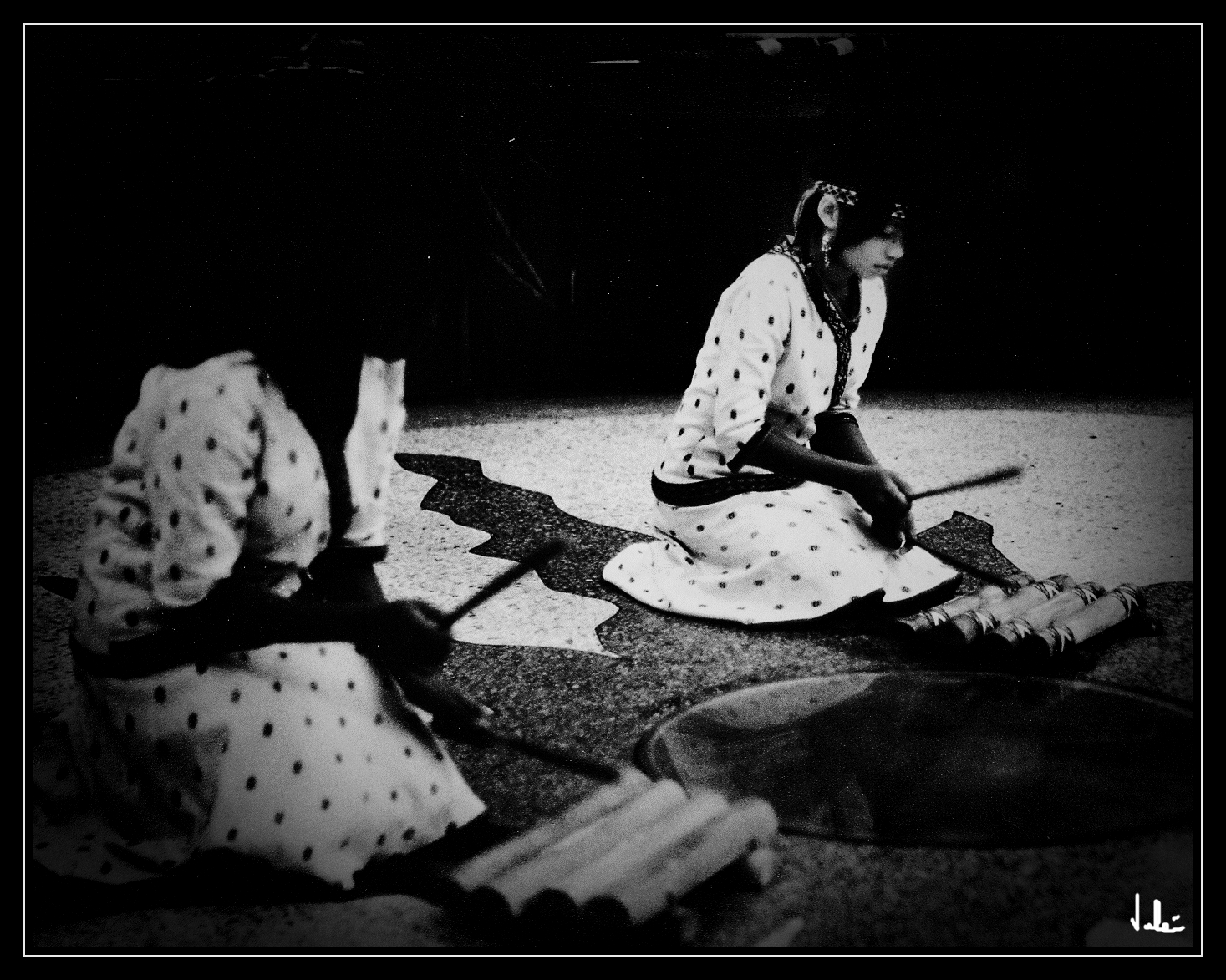
PS/ I took this photo during a ceremony by Taiwanese Original Inhabitants in North East of Taiwan. It is said that the indigenous people of Taiwan have lived on the island 8,000 years before a Han immigration to Taiwan took place in the 17th century. Taiwan’s aborigines have genetic ties to Austronesian ethnic groups such as the Philippines, Indonesia, Oceania, Madagascar and Malaysia.


Tuesday, February 23, 2016

The Corridors of Our Hearts


I have lived in cosmopolitan areas for more than fifty years on three continents. During this period, I have traveled to most of the large cities in the world, along with villages and dusty towns of emerging countries. Yet, when a year ago decided to open a new chapter of my life, it was the High Desert (about 6000 feet above sea level) of Arizona that won the first choice.

And I have not looked back. The vast open spaces of the high desert are made of 7000 feet tall mountains, covered in snow for at least two months, stubborn vegetation and trees, and of that silence that I have not listened to anywhere else. Except of course when the coyotes howl and bark at sunrise and at night, especially at full moon.

At least twice a week I fill my coffee canister with Irish Cream and leave for the desert an hour before sunrise. By now I have my favorite spots to watch the first rays. During the winter months the temperatures are below freezing and there will be snow on the ground. But as soon as the sun turns the rocks from gray to yellow, my coffee delightfully awakens all my senses. I sip slowly, almost at the rhythm of breathing during meditation: one, two, three, four – and inhale the warmth of the morning brew.

I have also learned much from Native American friends I now have.  The only teacher in this vast openness is nature. The only lesson is the one we already know but do not want to admit. It is the lesson of passing through the desert without leaving a trace. But somehow to let nature know how much we learned during that visit and journey.

… I was reading a 2007 book by Sage Bennet titled “Wisdom Walk”. It is about creating peace and balance while learning from the world’s spiritual traditions. I was interested in learning more about the Native American spirituality, but did read most of the other sections.  And it was on page 87, that a line resonated unexpectedly. The author says:

Those who are afraid to step down the corridors of our hearts are the ones to put on our list to forgive.”

Hmm.

Somehow it was not the concept of forgiving that stopped me to think, but the words “corridors of our hearts”. And it was not my heart that surprised me by this but rather the catacombs of my memory, since I immediately recalled the cover page of Time Magazine from the 1960s! Yes, there was an issue when for the first time, micro lenses were used to photograph the inner structures of a beating human heart. And I remember this because my father was the editor of a medical journal and brought that issue home. I had spent countless hours reading and re-reading every word of the magazine.

That was the moment when the heart stopped being the romantic center of my inner world. It was now a pump, and looking back at it, a rather simple one.
To the romantic I was, it was a sad day.

… Years later, as a health care professional I visited Mumbai, India. Again, I discovered the corridor of the heart, but this time in a very practical way. Indeed, given the gridlock traffic of Mumbai streets, when there was an accident and a fatality, it was practically impossible to transport vital organs from the deceased in a timely way to the transplant hospital so other lives can be saved or ameliorated. So, a “green corridor” was built in Mumbai where only ambulances can travel from the city to the airport. That way heart, liver, pancreas, and kidney can reach the transplant center during the critical and short time window.  In a most eloquent way, I was told that the “green corridor” is more than a special lane in the city – it was the pathway to the corridors of our hearts.

Ralph Waldo Emerson proposed that:

Man is a bundle of relations, a knot of roots, whose flower and fruitage is the world

I will think about this more tomorrow, when I have my first cup of coffee leaning against a sage brush, in the Arizona High Desert, at sunrise.

February 23, 2016
© Vahé A. Kazandjian, 2016


PS/ I did check on the exact date of the Time Magazine issue about the heart. It was January 19, 1968 and was titled “The Corridors of the Heart”.